

Systematic Approach Implemented in Stages
To address the client needs, the project was divided into three stages: Understanding business decision–making and data source selection; Data analytics modeling and evaluation; and Transformation of data into decision–supporting information.
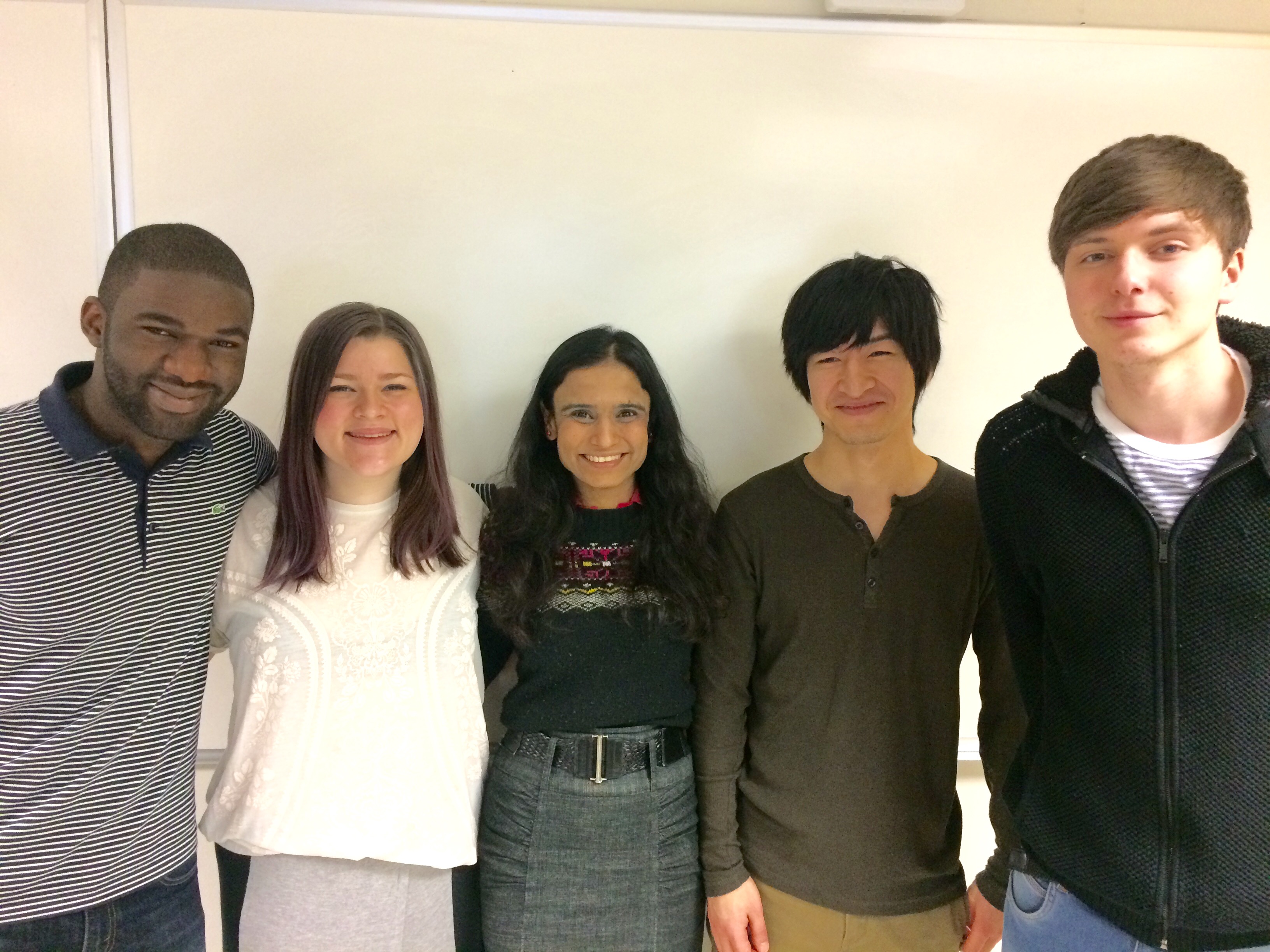
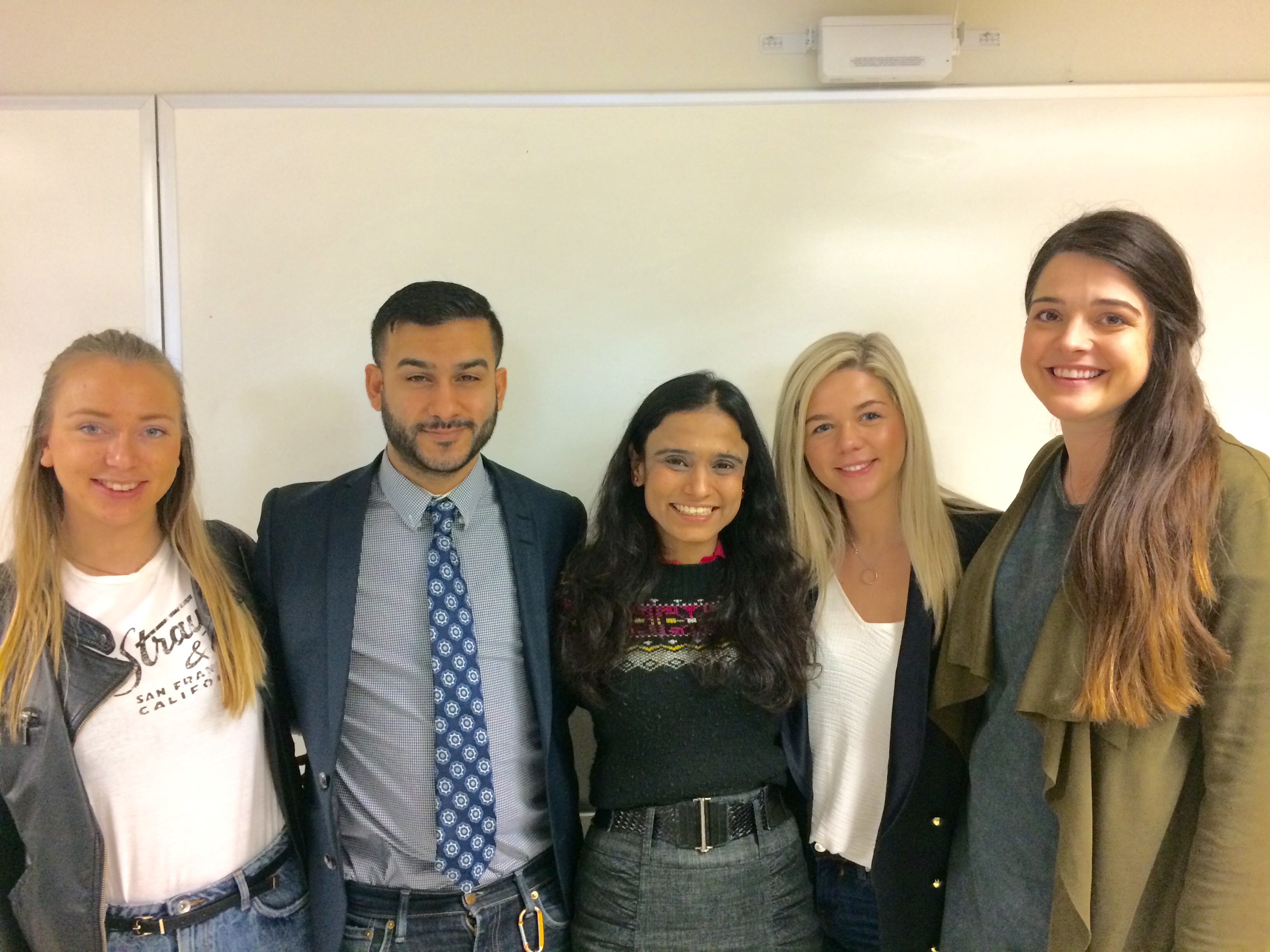
In the first stage, two student teams, the opportunity index team and the risk index team, conducted research to study the business factors and related data indicators that matter in market-entry decisions, as well as selecting the data sources to be analyzed. At the end of the first phase, the student teams developed two multi-dimensional indices: a Business for Peace Opportunity Index and a Business for Peace Risk Index.
They also prepared detailed reports documenting the key constructs, indicators, and relevance.
In the second stage, the teams conducted extensive data mining, wrote queries to extract indicator data from open datasets from multiple sources, joined the datasets together, filled data gaps and made it ready for the final stage.
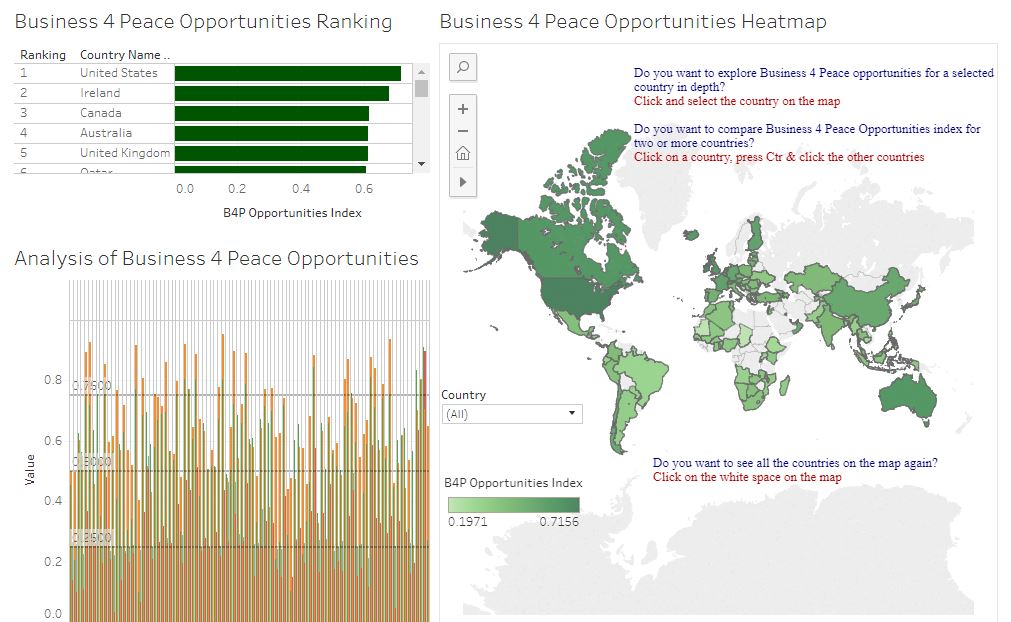
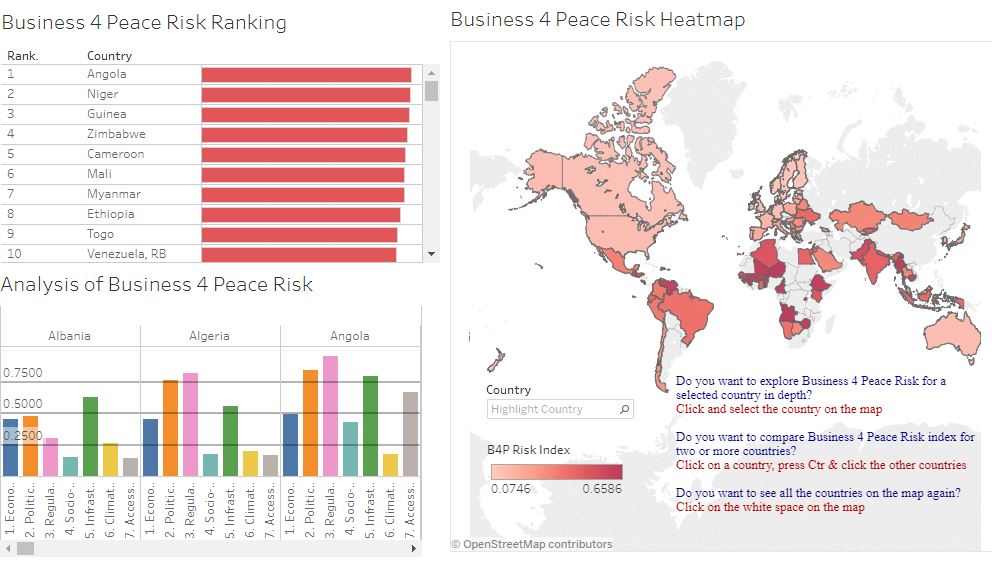
In the final stage, students applied analytics to create innovative visualizations, dashboards, and data stories. A working prototype of the index was published via Tableau and is accessible for viewing online here.
Hands-on Methods Provides Momentum
A key success factor was the close interaction among Berkeley College students and our sponsor, B4P Foundation. This strong collaboration allowed the students to obtain quick feedback, experiencing how it is to work for a real client facing a real-world challenge, and finding answers to questions that matter. As a result, the applied methodologies and analytics went far beyond what a traditional classroom problem set can create.
The initiative was not only valuable in terms of student engagement, retention, and persistence, but also in meeting the clients’ needs. “This project produced outstanding work,” said Axel Weber, chief analyst at the B4P Foundation. “Focusing on interactive data visualization using Tableau, and a very innovative data mining approach, the results of this project differentiates it from traditional business intelligence and analytics by delivering information not only fast, but by removing complexities, and by being intuitively understandable by clients and decision-makers.”
This type of innovative approach to analytics education engages and empowers Berkeley College students for success, enables them to make a meaningful impact in the world, and bridges the disconnect between the demands of the real world and the higher education system.

Dr. Darshan Desai is a Professor at Berkeley College in Manhattan, NY, who has taught management, international business, and analytics related courses internationally. Her broad research interests include data science and customer analytics.
- Can high-tech scale high-touch? - September 4, 2026
- Your institution’s AI strategy needs instructional designers - September 2, 2026
- The hidden link between AI strategy and student retention - August 31, 2026