
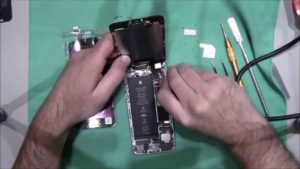
A Tech-Repair Implementation
Boasting the largest consumer electronics/technology store on a college campus in the U.S., Georgia Southern University’s The Tech Corner was a natural choice for Staymobile’s first higher-ed partnership. The company now has three other institutional partnerships in development for 2015.
Founded in South Carolina in 2009 when the iPhone and similar devices began to take over, Staymobile has since completed over 250,000 repairs and expanded to more than 20 retail storefronts in North Carolina, South Carolina, Virginia and Georgia. Aiming to provide repair services from certified technicians in as little time as possible, the company has paired up with numerous K-12 school districts, which has expanded into higher ed.
The company believes it’s a natural fit for education not only for fast repair time, but for its recommendations on accessories designed to enhance the functionality and utility of devices, as well as offer protection plans intended to cover devices, data and identity. All repair services (other than water damage) from Staymobile come with lifetime warranties.
“We’ve been very pleased with their whole operation,” said Bill Gargano, a long-time veteran of college tech center management and the director of Computer Sales and Services at Georgia Southern University. “They’re very professional, use quality parts without doing any re-using, and they have lifetime guarantees. Overall they’re a very professional company that I would recommend to anybody.”
Even before partnering with Staymobile, The Tech Corner always serviced the computers they sold, but ordering parts for repairs could often take up to a week. However, the partnership with Staymobile (which rents space in the college bookstore), allows for repairs more quickly by factory-trained technicians, since the company stays stocked with the parts needed for the most common repairs.
The Most Frequent Repairs Needed
Staymobile has identified cracked screens due to falls as the most common problem across all student devices at GSU, with water damage and data restoration being other major issues. Other common issues include battery problems and damage to charge boards due to constant jamming of chargers into devices.
“If there’s any technology issue on campus, bring it to us,” said Morrison. “We want to help diagnose the problem, and we don’t mind being a help desk.”
“It’s great that students don’t have to go find somewhere to get their devices fixed,” said Gargano. “Many freshmen don’t even have cars. So staying on campus and saving time is the biggest benefit.”
When asked to identify the biggest challenge of mobile repair on a college campus, Morrison was quick to point towards uncertainty of the market as the most challenging factor.
“We know exactly what a K-12 districts’ devices are,” said Morrison. “On a college campus, you can’t know what people are going to walk in with. We try to have the right inventory for the right products, and we generally know at least 75 percent of it, but you can never know for sure.”
There may also be issues with providing tech repair from the standpoint of campus bookstores as well.
“One issue can be simply finding space in the bookstore,” said Jonathan Bibo, COO of the Independent College Bookstores Association. “Is there a place that can be turned into a tech service center? Promotion and marketing on campus is key to getting up and running operationally as well. But once students know, these sorts of technology repair services have come off as truly successful. College stores in general just need to keep challenging themselves to find products and services customers want.”
(Next page: Benefits outside of repairs)
- 4 reinvention best practices from across the pond - August 29, 2016
- New tool plays admissions matchmaker - August 15, 2016
- New tech to revolutionize studying abroad education - July 5, 2016