
Step 2: Get equipment that the industry is actually using
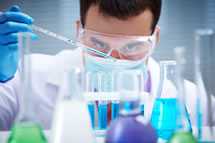
The new STEM building will also bring new lab equipment to classrooms and undergraduate laboratories in an effort to prepare students in STEM majors for the workforce.
Natural Sciences Department Chair Dr. Michelle Furlong said Clayton State University received $2.9 million in grants from the state of Georgia to equip the building with furniture, fixtures and laboratory equipment that she explained will help enable faculty to deliver a better education experience to their students.
For example, Furlong said the college would be purchasing an electron microscope, which will allow students to examine the three-dimensional structure of a cell. Improvements like these better prepare students entering STEM fields as more employers are seeking students who have applied their STEM education to real life challenges, according to Furlong.
She also hopes the new equipment such as a Mass spectrometer and Gas Chromatograph, which can be used to expand students’ knowledge in analytical chemistry, will be a catalyst for growth in Clayton State’s STEM programs by allowing them to offer new courses in areas such as forensic science.
Each classroom will also be equipped with updated projectors, cameras and computer equipment, which are already being used in the classroom by instructors, and will allow instructors to focus on teaching, not technology, when transitioning to the new building, said Gruszka.
“We have provided faculty with full presentation equipment,” Gruszka said. “It is fairly standardized, which makes them be able to be more concerned with teaching. Most of the magic in the new building will be in the classroom. I think we have provided the technology infrastructure for the magic to happen.”
Step 3: Build for faculty-student collaboration
In total, the new building will feature 16 new laboratories, with half being used for teaching and the other half being used for undergraduate research.
According to Furlong, the new laboratories are essential to continuing the success of the STEM programs at Clayton State University, whose growth has been limited by the lack of resources and equipment available to them.
“We are out of room to grow our programs because the students have to take so many lab classes, and our facilities are overloaded,” Furlong said. “The new teaching labs will allow us to not hit the maximum number of hours available per lab so quickly.”
Network infrastructure and new lab equipment mean nothing, however, without a faculty committed to bringing the best education experience possible to their students, explained Furlong, which is something she wanted to make sure continued in their new space.
“The innovative laboratory teaching spaces in this building will expand our support of undergraduate research projects where faculty and students work side-by-side in the learning and exploration process,” Clayton State University President, Dr. Thomas Hynes said.
To continue their commitment to their students, the administrators and faculty, who were involved with planning the new Clayton State University science building, made sure to include student meeting spaces and study areas in close proximity to the offices of faculty members and undergraduate laboratories.
“Learning goes beyond the classroom. It happens spontaneously, and we want to be a part of that, she said. “It is important to us; we’re not a research university. We hold long office hours and want to continue to interact with the students.”
Once complete, the science facility will be 64,000 square feet spread over three stories, and also housing a future vivarium, mechanical penthouse and basement, and loading dock, according to a statement released by Clayton State and McCarthy Building Companies.
The new building is set to open in June 2015, and expected to hold its first classes during 2015’s fall semester.
Peter Sclafani is an education freelance writer for eCampus News.

- Using student housing to sharpen your retention strategy - September 23, 2026
- Preparing with confidence: Reflections on the dissertation proposal defense - September 18, 2026
- Beyond the gotcha game: Moving from AI detection to verification-first supports stronger academic integrity - September 16, 2026
Comments are closed.