
Key points:
- Before a proposal defense, anxiety can stem from uncertainty rather than the defense itself
- To rebuild adult learner confidence, universities must first earn their trust
- Archiving your academic journey: Preserving coursework and program artifacts
- For more news on dissertation proposal defenses, visit eCN’s Campus Leadership hub
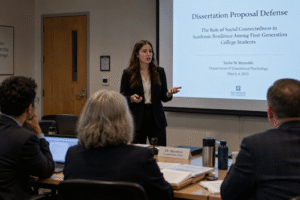
The dissertation proposal defense represents a significant milestone in the doctoral journey, marking the transition from planning a study to engaging as an emerging researcher. Although this experience is exciting, many doctoral students approach the defense with uncertainty about what to expect and whether they are adequately prepared. Researchers Amador-Campos and Greener have identified the dissertation process as a challenging experience that can involve stress, self-doubt, and uncertainty, reinforcing the importance of mentoring and support throughout the process.
As two doctoral candidates in an educational doctorate program who recently completed our dissertation proposal defenses, we entered this milestone with different research topics and similar questions: Would we feel prepared? Would we be able to respond effectively to our committee’s questions? Would our proposals demonstrate the rigor expected of doctoral researchers? This article is not intended to provide a step-by-step guide for completing a proposal defense. Instead, we share reflections from our experiences and lessons learned that may help future doctoral students approach this milestone with confidence.
Expectations Versus Reality
Before our proposal defenses, our anxiety came from uncertainty rather than the defense itself. We imagined the experience as an oral examination where committee members would search for weaknesses and expect immediate answers to every question. We worried that not knowing an answer at the moment might indicate inadequate preparation. However, our experiences were different. The defense was not an attempt to identify flaws; it was a scholarly conversation focused on strengthening our research. Committee members asked thoughtful questions designed to clarify our thinking, examine our decisions, and provide feedback to improve our studies. We learned that pausing to reflect before responding was a part of engaging in meaningful academic dialogue. Looking back, the questions we received were opportunities to explain our reasoning rather than defend our competence. The defense became less about proving we had all the answers and more about demonstrating our understanding of the research process.
Most Impactful Preparation
The preparation that contributed most to our confidence was not memorizing our presentations but rather holding a true understanding of our studies. While practicing our presentations was valuable, we realized successful defense preparation required knowing why each methodological and theoretical decision was made and being able to explain those choices conversationally. Meeting regularly with our dissertation chairs, reviewing our conceptual frameworks, and revisiting our research methodologies were essential parts of our preparation. Practicing how we would explain our decisions aloud helped us feel more comfortable discussing our research. In contrast, trying to memorize every slide or anticipate every possible question increased stress rather than confidence. We learned that a proposal defense is not a performance requiring perfect answers. It is an opportunity to share a researcher’s work, engage in scholarly discussion, and receive feedback that contributes to continued development and learning.
Receiving Feedback and Working Through Revisions
Receiving approval at the end of our proposal defenses felt like a significant accomplishment, but it did not mean our proposals were finished. We both left our defenses with revisions to address before moving forward with our studies. Initially, it was easy to focus on the number of comments and feel overwhelmed by what still needed to be completed. However, our perspectives shifted as we began working through feedback. Rather than viewing comments as evidence that we had made mistakes, we began to recognize them as opportunities to strengthen our studies before data collection began.
We found it helpful to document committee feedback immediately and review all comments before making changes. From there, organizing revisions into themes made the process more manageable. Larger considerations related to study design, research questions, methodology, and Institutional Review Board (IRB) requirements took priority, while smaller edits related to wording, grammar, and APA formatting came later. When feedback was unclear or recommendations seemed to conflict, our dissertation chairs were an important resource for determining how to move forward. This reinforced the value of supportive faculty relationships throughout doctoral research, particularly as students navigate feedback and develop greater independence as researchers.
What We Wish We Had Known Before Defending
Looking back, there are several things we wish we had understood before walking into our proposal defenses. First, revisions are a normal part of the process. Passing a proposal defense with revisions is still passing, and receiving feedback does not mean the proposal was unsuccessful. In fact, some of the questions that initially felt were the most challenging led to meaningful improvements in our studies.
We wish we had a better understanding that the committee is invested in helping the study succeed. Committee members bring different perspectives and expertise, and their questions can identify areas that need greater clarity before the research begins. Most importantly, confidence does not require knowing every answer or recalling every detail immediately. It develops through preparation, reflection, and a strong understanding of the reasoning behind research decisions. The proposal itself is expected to evolve throughout this process. Ultimately, the defense is less about demonstrating that a study is finished and more about demonstrating the ability to think, explain decisions, and engage as a researcher.
Conclusion
Although our dissertation topics differed, our experiences with the proposal defense were remarkably similar. What initially felt intimidating became a collaborative scholarly conversation focused on strengthening our research. Preparing thoroughly, understanding the reasoning behind our decisions, trusting the guidance of our chairs and committees, and approaching revisions as part of the research process helped transform the experience. These lessons can be translated to other academic or professional situations where preparation, feedback, reflection, and confidence contribute to growth. We hope these reflections help other doctoral students approach their proposal defenses with greater confidence, openness to feedback, and perspective as they take this crucial step toward becoming independent researchers.

Kristin E. Berndt is an assistant professor in the Department of Speech, Hearing and Rehabilitation Services at Minnesota State University, Mankato. She is also an Ed.D. candidate at Winona State University, with professional and research interests in clinical education, student preparedness, and medical speech-language pathology.
Sara J. Welch is a middle school instructional coach in Marshall, MN and an Ed.D. candidate at Winona State University, with professional and research interests in instructional coaching, literacy, and the impact of coaching on student reading proficiency and achievement.
- Preparing with confidence: Reflections on the dissertation proposal defense - September 18, 2026
- Beyond the gotcha game: Moving from AI detection to verification-first supports stronger academic integrity - September 16, 2026
- Choose encouragement before negativity sets the tone - September 11, 2026