
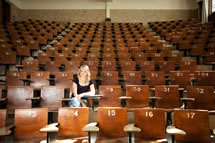
Meneely’s experience with active learning classrooms has been “overwhelmingly positive,” when compared to the time he has spent in traditional lecture halls. He has noticed more students participating and less students using their phones or computers to browse the internet during class.
Vice President of Education Markets for KI Furniture, Amy Kiefer said KI is working with schools like MIT and the University of Minnesota to come up with new ways to optimize classroom space. While she emphasized that there’s no one-size-fits-all approach to creating dynamic spaces, she said the company’s aim is to make it easy for students to break into groups in order to discuss problems, and then rejoin the rest of the class for a larger discussion.
“Our approach is that the product and solution we bring will fulfill the mindset of the school,” said Kiefer. When planning new classrooms KI tended to draw idea from areas of campus where students congregated such as student unions or dining halls.
Both KI and Steelcase also aim to make classrooms multifunctional. Universities wanted classrooms to become multipurpose rooms that students could to study or work on group projects use during hours when class was not in session, which can make students more comfortable interacting with each other when they are in class, said Meneely.
Using furniture with wheels that can be easily moved, and include access ports built into the desks, students can rearrange classrooms to fit their study needs when class is not in session, said Meneely.
One room designed by Steelcase at the University of Florida can be turned into an impromptu coffee house. The room which features a kitchen, and includes tables and chairs of varying heights that can be easily moved depending on the student needs, is just one of many ways Steelcase and KI are using furniture to transform old rooms into multipurpose study spaces.
“If I can make a classroom that serves other purposes it becomes multifunctional,” Meneely said. “If you don’t think of classrooms as line items you get out of the mindset of the classroom being a separate space,” only to be used during class sessions.
One barrier Meneely has noticed is professors not using the equipment provided to them the right way, noting that some instructors need to be taught to break away from the traditional lecture model. However, he said after becoming more comfortable facilitating discussion professors seem to enjoy teaching more.
“Information technology has broken down the barriers to learning,” Meneely said. “A lot of times student have better access to research during a traditional lecture mode than the professor,” but students may not feel comfortable pausing a lecture to give the professor new information or bring up a new idea in class, the active learning model is a way to change that.
Peter Sclafani is an education freelance writer for eCampus News.

- So, you want to be a school administrator? - November 4, 2026
- 5 best practices for building a university-wide model for online enrollment growth - November 2, 2026
- The data retention challenge for online exam platforms - October 28, 2026