
Cyberthreats skyrocketed when COVID closed campuses and forced faculty, students, and staff to access important–and often sensitive–learning materials online from home computers and home networks. And with many institutions reverting to hybrid or online learning as COVID variants peak, cybersecurity threats are far from over.
As data security breaches–including ransomware attacks, phishing, and unauthorized disclosures–show no sign of slowing, higher-ed IT leaders need to be ready. Threats to higher education networks will never be eliminated, but there are strategies to successfully defend campus information infrastructure.
IT teams understand how important cybersecurity measures are, but many struggle to pinpoint where to begin when their resources are limited.
Want to learn more? Join a conversion with fellow edtech leaders and experts as they share best practices on both the technical aspects–software and services–and the human aspects–professional development and community education–of keeping your networks safe and sound.

- 5 essential dimensions of AI literacy - December 12, 2025
- 10 reasons your campus needs to upgrade to Windows 11 - November 11, 2025
- How Windows 11 is powering the next generation of higher-ed innovation - October 21, 2025
More from eCampus News

McGraw Hill Transitions from Traditional Textbook Edition Publishing Cycle with New Evergreen™ Delivery Model
COLUMBUS, Ohio (GLOBE NEWSWIRE) — McGraw Hill announced the launch of an industry-first delivery model that releases digital product updates directly to existing courses already built by instructors, replacing the…
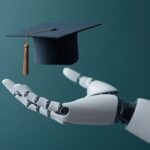
2045: A day in the life of a student
It is 6:45 a.m. in the year 2045, and Maya wakes to the gentle chime of her AI-integrated learning assistant. The device, embedded into her home’s wall system, has already analyzed her biometric data, sleep cycle, and class schedule to recommend a custom morning routine.

The rise of AI-native universities
In a world where artificial intelligence is rapidly reshaping how people learn, OpenAI has introduced a compelling and provocative concept: the AI-native university.

Navigating AI in the modern classroom
Education helps develop our cognitive muscles. Letting AI do it for us is not the answer, but could AI be a thought partner to help build this skill? Could we be teaching students about prompt engineering so AI can help them find holes in the arguments?

AI prompt engineering is a critical new skillset
Prompt engineering–the ability to craft precise, thoughtful inputs for AI tools to produce effective outputs–is quickly becoming an essential skill in modern education. More than a technical trick, it’s a pedagogical shift.

Why AI-driven education must replace an outdated learning model
It is time to discard STEM education entirely and replace it with a more progressive, cost-effective, and skills-based alternative–one that harnesses AI to create a more adaptive, personalized, and relevant educational system for the twenty-first century.