
The Higher Education Act
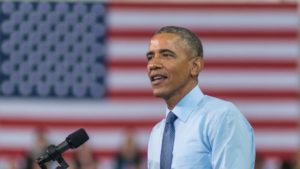
His Administration will be the first that did not manage to reauthorize the Higher Education Act (HEA). Congress is partly to blame, but reauthorizing the HEA was never really a significant priority for the Obama Administration, and they never advanced serious, definite proposals to make it happen. [Source: Higher Education Today]
Pell Grants and Families
Federal spending on higher education has increased significantly.When the Obama Administration took office in January 2009, funding for Pell Grants stood at $17 billion. Today it is roughly $30 billion, a 77 percent increase. The maximum Pell Grant award went from $4,731 in 2009 to $5,815 today. [Source: Higher Education Today]
Federal tax provisions to help families meet college expenses have almost doubled from $18.3 billion to $35.1 billion. Much of this is attributable to the enactment of the American Opportunity Tax Credit in 2009. Today, this tax benefit alone totals $16.6 billion. [Source: Higher Education Today]
However, when it comes to lessening institutional resource gaps Pell Grants may have done more harm than good. “To the extent that you have two types of institutions, one that’s on the 10 mile marker and the other that’s at the zero, and you give them both the same help, you’ve not narrowed the gap,” said Schneider. “Harvard doesn’t need an infusion of cash from the federal government—Howard does. So the failure to put money into the institutions and instead to rely on increasing [student-centered programs like] Pell grants really misses the point. An investment in historically underfunded institutions like HBCUs is necessary in addition to programs like Pell.” [Source: The Atlantic]
Overall Student Loans
The Obama Administration concluded that it would be cheaper and more efficient if the government made all loans directly to the students, instead of through banks, because there would be no subsidy to private financial institutions and other middlemen. The Administration used most of the savings from this change—some $68 billion over ten years—to finance an expansion of the Pell Grant program. Without the adoption of 100 percent direct lending, the expansion of the Pell Grant Program noted above would have been seriously constrained. Federal student loans also increased, going from $78 billion to about $96 billion today. [Source: Higher Education Today]
However, some argue that while removing private banks from the federal student-loan process was a win for consumers, increasing access to federal loans for low-income family students doesn’t actually solve the college-affordability problem; it widens the already-growing race-based wealth gap. [Source: The Atlantic]
Additional Funding
Federal spending on scientific research conducted campuses has grown from $25.9 billion in 2008 to over $30.2 billion, a gain of 17 percent. That amount may increase further when the fiscal 2017 spending bills are finalized. Federal spending on veterans’ higher education benefits went from $3.6 billion overall in 2009 to an expected $15.2 billion that is expected to be awarded to veterans in the current academic year—a more than threefold increase. [Source: Higher Education Today]
(Next page: Completion, safety and overall regulation)
- 25 education trends for 2018 - January 1, 2018
- IT #1: 6 essential technologies on the higher ed horizon - December 27, 2017
- #3: 3 big ways today’s college students are different from just a decade ago - December 27, 2017