
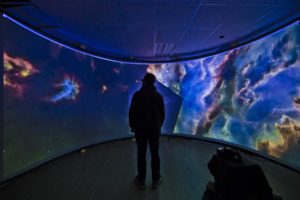
Dr. Sarah Murthi, a trauma surgeon at the R Adams Crowley Shock Trauma Center in Baltimore and a clinical associate professor at the University of Maryland School of Medicine, explained how the Augmentarium is also working closely with health care experts in order to design experiences that can help to train and improve the skills of doctors. Using lightweight headgear, surgeons could see critical information about their patient in real time while in the operating room, or even perform a surgery from a distance using virtual reality to see the patient and robotics to mimic their movements in the actual operating room. Doctors can also practice rare surgeries using virtual reality simulations to keep their skills sharp on their down time. Similarly, medical students can experience first-person training that they can repeat if they make a mistake to become more familiar and experienced with real-world situations.

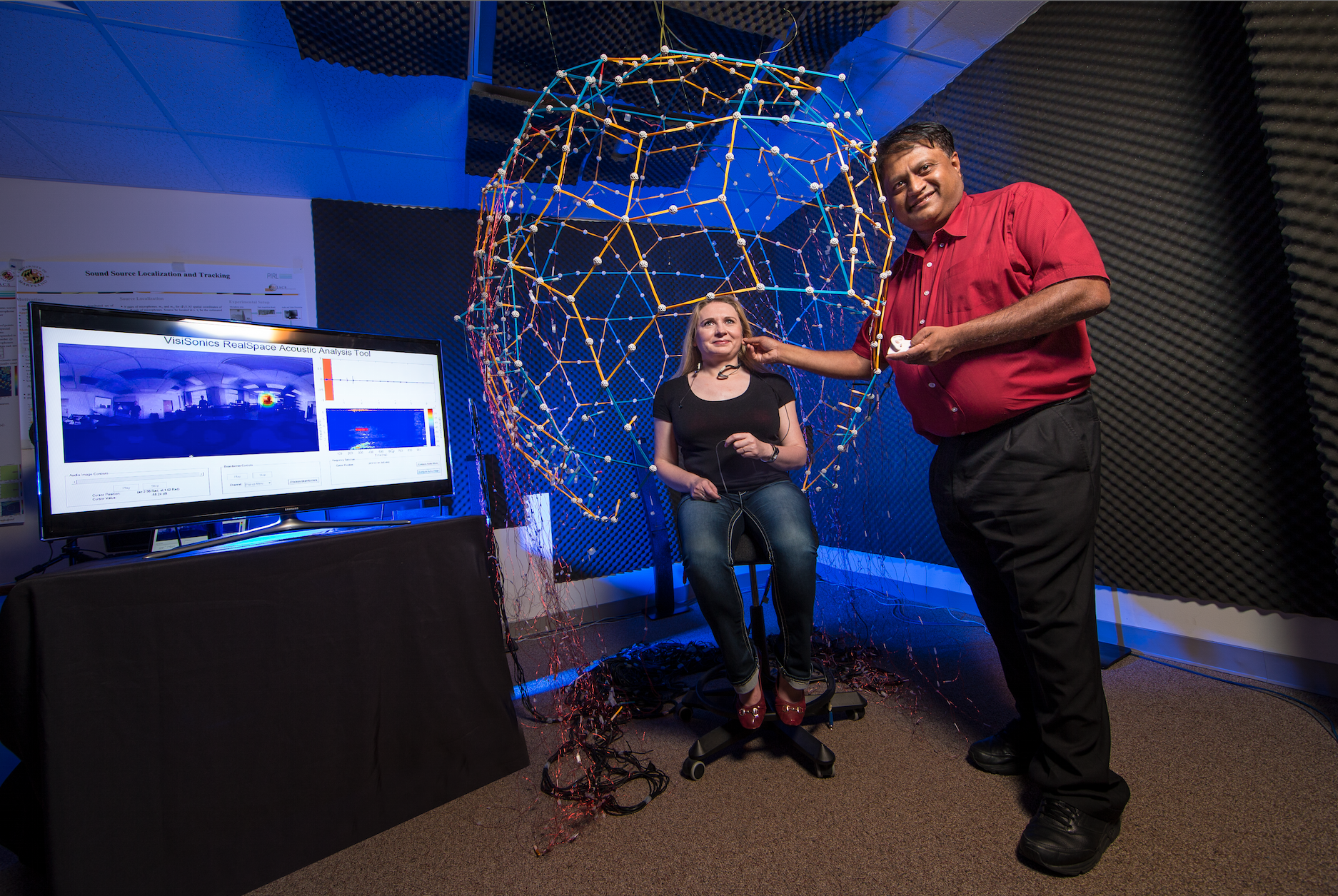
A UMD startup called VisiSonics, co-founded by Professor Ramani Duraiswami, was also highlighted, which the University says has greatly advanced the experience of 3-D audio so that everything sounds completely correct to the user, even to the slightest turn of his or her head. The technology has been licensed by Oculus Rift to be a key component of their upcoming commercial product in 2016.
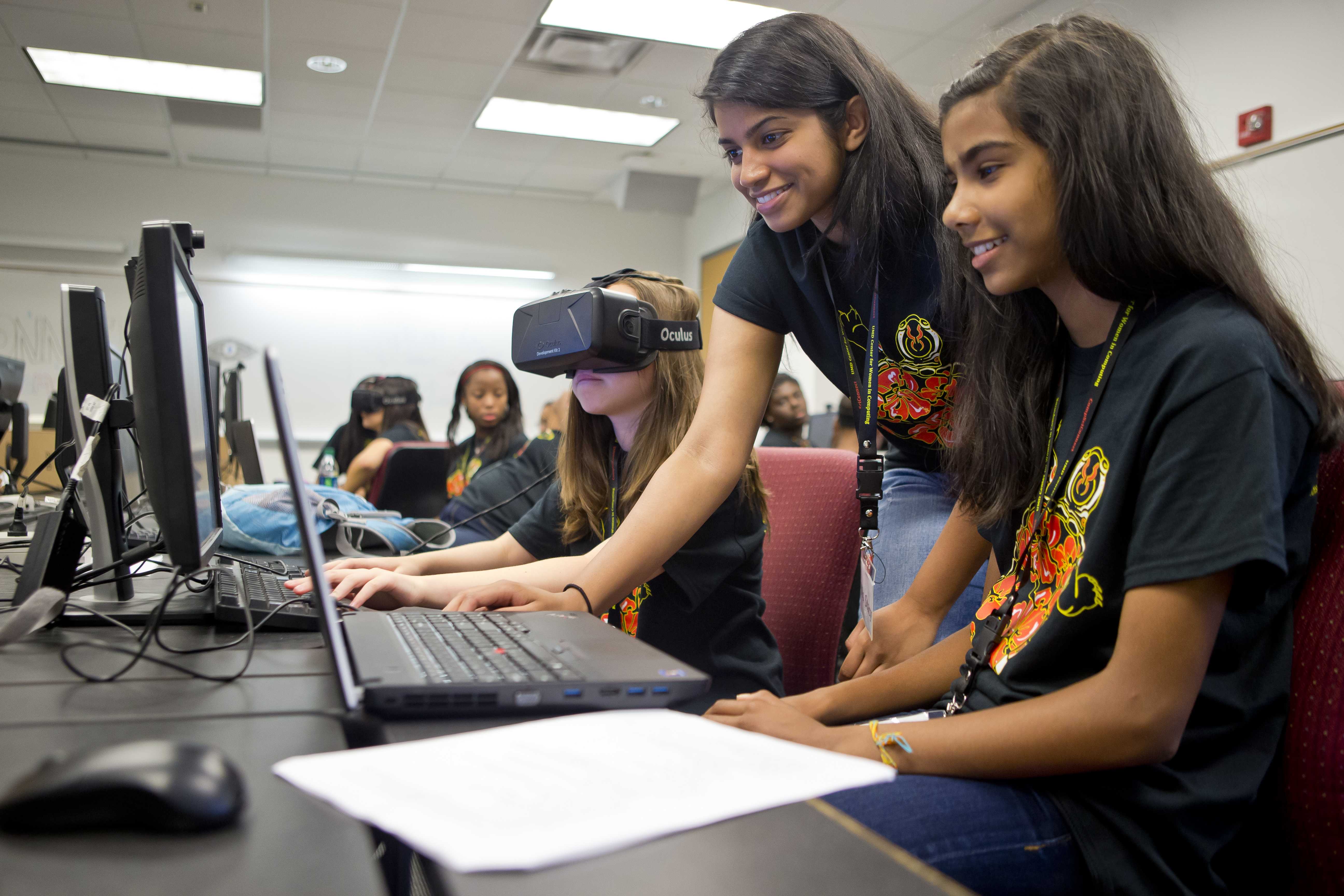
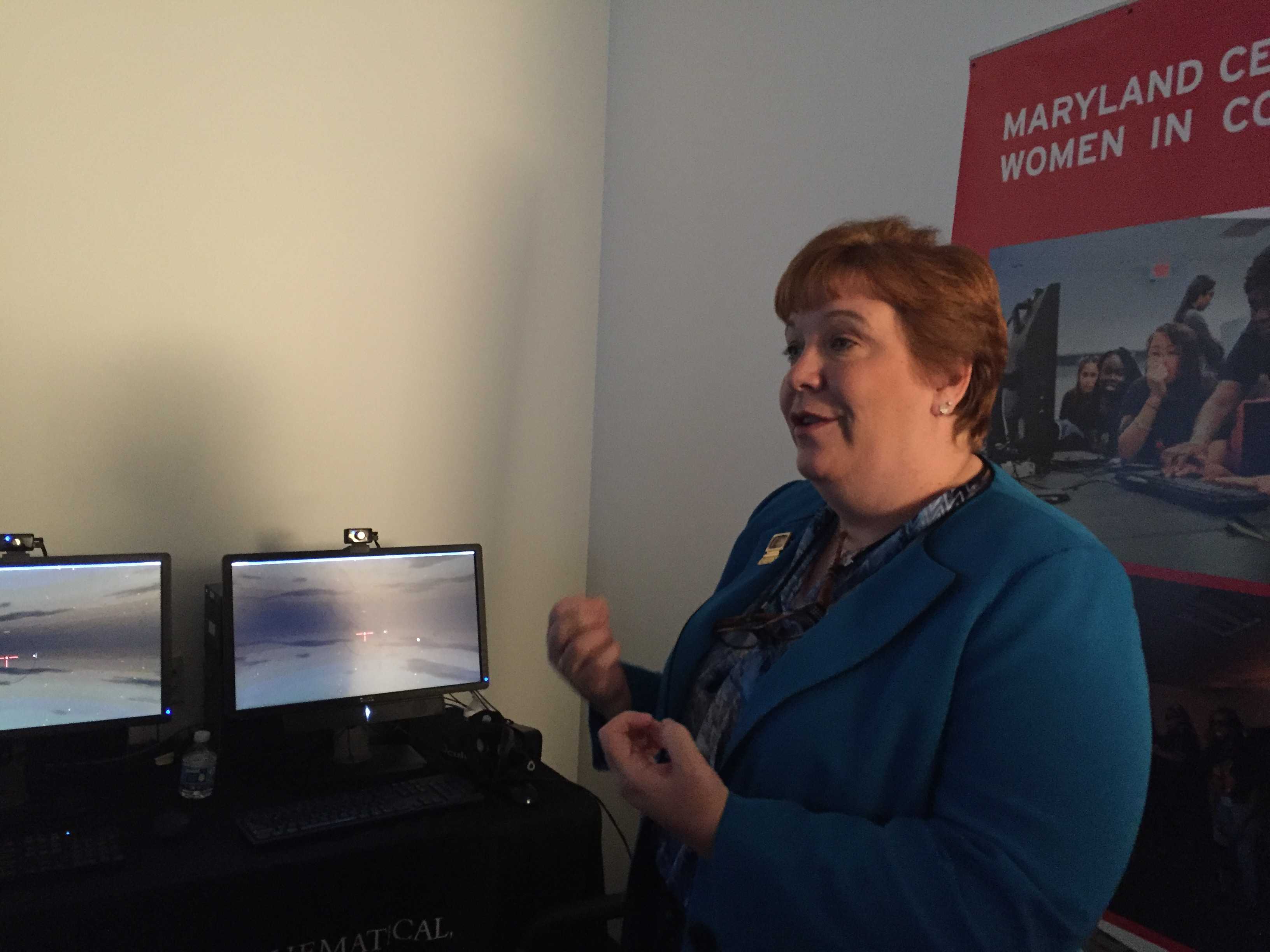
Finally, the potential uses of augmented and virtual reality within curricula could be limitless, since any concept with a special or physical component can be better understood through a student’s firsthand use of virtual reality technology, and would likely make learning even more interesting and exciting for most students, says the University. This increase in excitement has been seen at a successful UMD camp run by Jandelyn Plane, director of the Maryland Center for Women in Computing, in which underrepresented middle school girls learn about coding to design virtual games and experiences.
In fact, MOOCs could stand to benefit the most from advances in virtual technology, noted University reps; for instance, by enabling a student to enter a virtual classroom where they could interact with fellow participants.
Going Past Potential to Application
Attendees of the Augmentarium were able to see an algorithm identify high contrast areas of color, intensity and orientation in a 4.5 gigapixel image of Mt. Whitney to find a specific anomaly – a hiker in a red shirt – in mere moments. They were also shown images of what that person in the grocery store, or the soldier, or the surgeon would see using augmented reality glasses.
Beyond just augmented reality, attendees were able to enter into detailed virtual worlds as well.
For example, this editor was able to put on glasses and experience a shock trauma situation from the moment a helicopter landed through the beginning of a surgery–an experience that could prove invaluable for helping prepare students for feeling comfortable with similar situations when they actually become doctors.
I was also able to experience the advances VisiSonics have made with 3D sound technology as I progressed through a story where every bit of dialogue sounded authentic based on my distance from the speaker.
I was then invited to play a game designed by Plane’s middle school girls where I shot asteroids down in the vacuum of space, accurately targeted by my vision alone.
Finally, I flew through the caverns of a gigantic space station as if I were Luke Skywalker flying my X-Wing through the Death Star in Star Wars with such realism that my body did not initially allow me to take a step forward due to an instinctual attempt to avoid falling.
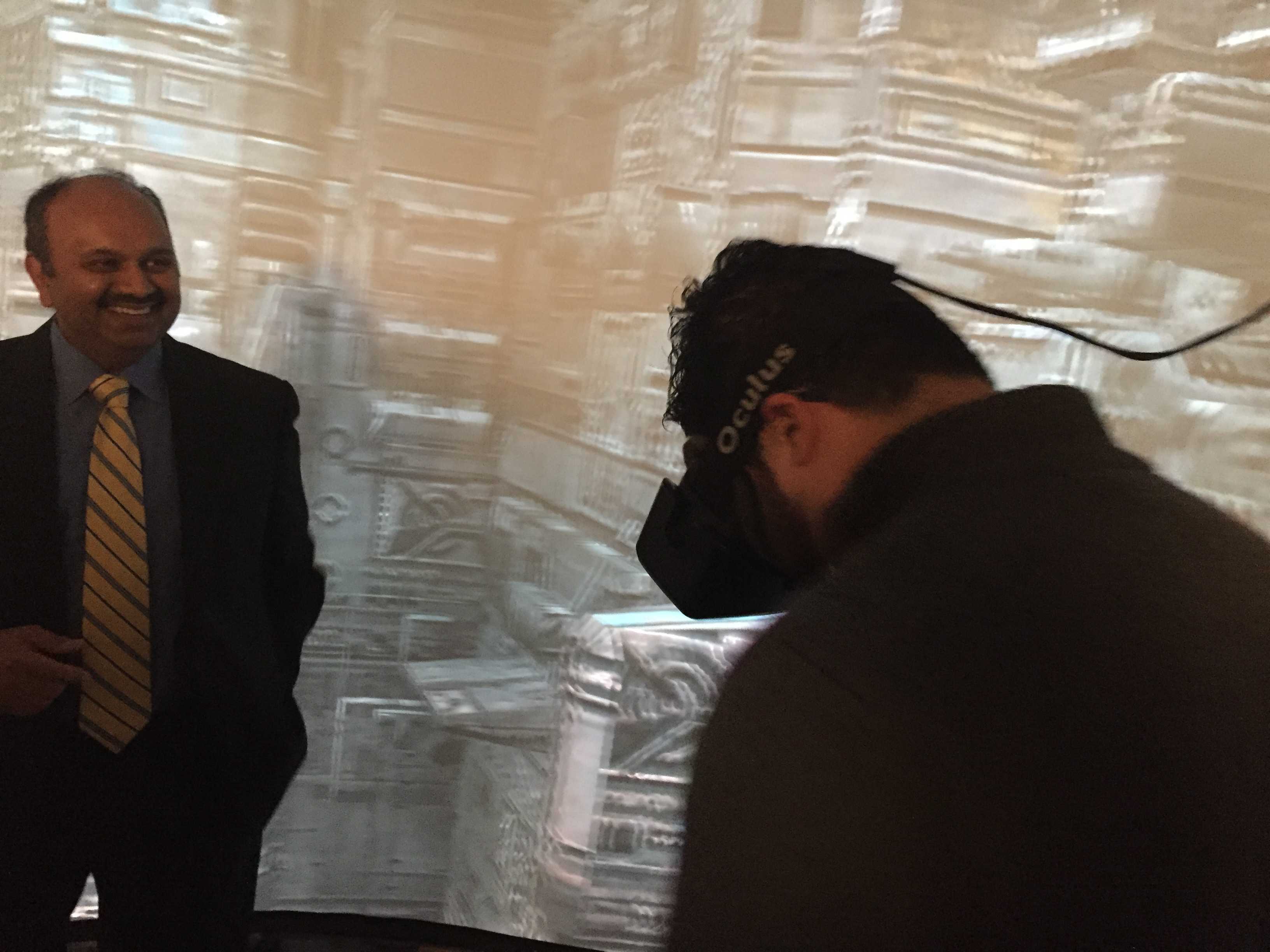
Sure, the Oculus Rift headgear might be large and bulky right now, but as Varshney wisely pointed out: remember cell phones 20 years ago?
With such a wide range of applications to explore for augmented and virtual reality, the projects the Augmentarium is working on are only the beginning. As more universities and companies begin to explore what AR and VR can do with the same dedication that the University of Maryland has shown thus far, the sky will truly be the limit.
Perhaps simply taking that step into a new world is all it will take.
- 4 reinvention best practices from across the pond - August 29, 2016
- New tool plays admissions matchmaker - August 15, 2016
- New tech to revolutionize studying abroad education - July 5, 2016