
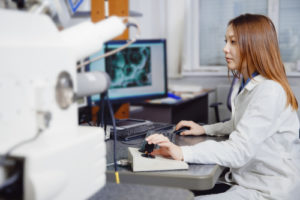
Fortunately, we are seeing a growing trend toward more flexible, software-based educational equipment. Unlike older, fixed-function devices—many of which were designed to do just one thing–these new technologies are mirroring trends in consumer tech including adding interactive UI, enhanced connectivity, and additional flexibility that resonate with the modern student and better reflect the technologies they may use in real-world applications. These, combined with other emerging technologies like online interactive learning, simulation, augmented and virtual reality, and digital gaming, are helping to increase student engagement in thinking through complex concepts to develop a deep knowledge of STEM.
Another great benefit of easy-to-use and accessible equipment is that it can serve as a means to improve diversity in STEM, especially among groups that have historically been less inclined to pursue STEM fields. Currently in the U.S., Black and Hispanic workers remain underrepresented in the STEM workforce compared with their share of all workers, including in computing jobs, and women remain underrepresented in job clusters such as the physical sciences, computing and engineering.
This is unfortunate, because it has been shown that a more diverse team is more likely to outperform a more homogenous team–people with different backgrounds have different experiences and perspectives, they approach problems differently, ask different questions, and develop more innovative solutions. Greater inclusivity leads to greater likelihood of scientific success.
While there are many factors that contribute to this diversity gap, one major reason could be the intimidation factor – about half of adults (52 percent) say the main reason young people don’t pursue STEM learning and degrees is because they think these subjects are too hard. That’s where these new technologies and platforms come in – intuitive, user-friendly equipment makes people more comfortable exploring, even those who might not typically see themselves as STEM-focused. Studies have shown that a sense of belonging or a lack thereof greatly affects academic success. So, by providing technology and tools that all students feel comfortable and familiar with can help to foster diversity and inclusion while alleviating some of the issues of perceived difficulty.
By the year 2025, there will be 3.5 million STEM jobs in the U.S., according to the National Association of Manufacturing and Deloitte. Despite future projections, there remains a vast talent gap that may cause as many as 2 million of these jobs to go unfilled. In order to fill these gaps and support a technologically advanced society, the integration and effective use of modern, relevant technology is vital to enhance STEM learning.
Not only will improved STEM learning provide a better, more engaging student experience, but one that is more accessible, resulting in a more diverse workforce that is better prepared to meet the challenges and seize the opportunities of the next generation – things like climate change, health and wellness, quantum computing, and space exploration, where having a solid background in applied STEM will be crucial.

Daniel Shaddock is CEO of Liquid Instruments and a Professor of Physics at the Australian National University. Prior to this, he was a Director’s Fellow at NASA’s Jet Propulsion Laboratory.
- Schools are building AI rules before they know the destination - August 17, 2026
- Cohort connections matter: Strategies to help graduate students persist and succeed - August 14, 2026
- Higher education needs better AI experiences, not more AI tools - August 12, 2026