
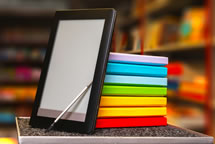
If the eBook industry wants to increase student appeal, they will have to take accessibility and usability features into account. eBook choice may have to improve, and they may have to include more features that physical textbooks cannot, like special graphics and interactive links.
But there are some things they can’t fix; for example, 11 percent of survey respondents just preferred print textbooks because of the physical feel.
Also, often times with students, digital or print preference comes down to cost. They are happier with whatever is cheapest, and an important question to consider with Kindle Unlimited’s release is, ‘why pay a monthly fee when you can just go to a library for free?’ Not only do libraries have thousands of print novels, but also 90 percent now lend eBooks, according to a new study by the American Library Association.
eBook interlibrary loan (ILL) is growing in popularity and can be especially useful to students doing academic research and who may only need to read eBooks, or parts of eBooks, briefly.
“There will always be a place for eBooks in the academic library,” said Ryan Litsey, document delivery assistant librarian at Texas Tech University and project manager of the Occam’s Reader Project.
The eBook interlibrary loan pilot project incorporates new web-based software —developed by teams from Texas Tech, the University of Hawaii at Manoa and the Greater Western Library Alliance (GWLA) — that allows users to access almost one million titles.
The main purpose of the project, which began last spring, was to “cut through the technical restrictions” that are currently in place in academic libraries when people try to access eBooks, said Kenny Ketner, user interface and server manager of the project, adding that eBook discoverability is “problematic” in the library industry.
Occam’s Reader was not created to compete with services like Kindle Unlimited, which have users that do a lot of private and popular reading, Litsey said.
Instead, Occam’s Reader has a simple design and does not include links or metadata that full versions of eBooks may include. Instead, the program takes pictures and sends a simplified version of an eBook’s contents to the person requesting it.
Users can perform the basics on the viewer, like jumping pages and zooming in and out, making “The interface really bare bones, and that’s intentional,” Ketner said.
“We want to provide access [to eBook material], but not compete with a vendor who provides a sophisticated viewer interface,” Litsey said.
The ILL service that Occam’s Reader provides has been done for years with physical books, and ILLiad software is what many academic libraries use to manage ILL exchanges. With that in mind, the Occam’s Reader team decided to work with ILLiad software to make the loan process as easy as possible for libraries.
33 institutions, all part of GWLA, currently have access to Occam’s Reader eBooks, which are exclusively provided by the publisher Springer.
“This is the first time we see an academic library work with a publisher on a platform designed by a library,” Litsey said.
Schools have different expectations when it comes to eBooks, Litsey added, so allowing libraries to build their own platform in a way that works for their own students can be beneficial.
In the future, Ketner said they want to add more publishers and institutions to the project. About 150 academic libraries from around the world have expressed interest in participating in the project and are currently on a waiting list, Litsey said.
Instead of services like Kindle Unlimited, perhaps new innovative practices like Occam’s Reader may be that step in the right direction to get students more interested in using eBooks.
Molly Schulson is an editorial intern with eCampus News.

- Schools are building AI rules before they know the destination - August 17, 2026
- Cohort connections matter: Strategies to help graduate students persist and succeed - August 14, 2026
- Higher education needs better AI experiences, not more AI tools - August 12, 2026