
Key points:
- Without college counseling reform, students will continue to lose out
- Rebuilding trust, relevance, and results in higher ed
- Here’s what I wish I’d known as an immigrant student heading to the Ivy League
- For more news on college counseling, visit eCN’s Campus Leadership hub
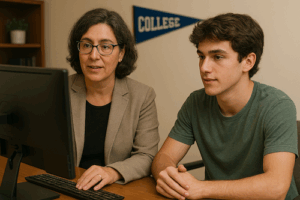
The U.S. is facing a hidden education crisis–and it’s not test scores or curriculum wars. The average student-to-counselor ratio is 376:1, meaning that the average public high school student gets less than one hour of their counselor’s attention for college planning.
Students are being short-changed for any form of guidance counseling, and the bottleneck is quietly narrowing the college opportunities available to thousands of capable, deserving students.
The scope of the problem: Time and resource-strapped is an understatement
Unfortunately, the job title of “college counselor” or even “guidance counselor” is misleading today. Most high school counselors are not focused solely on college counseling–they juggle dozens of competing roles, often expected to manage hundreds of students’ academic progress, social-emotional well-being, crisis needs, college and career planning, and more. That same counselor might be developing the master schedule, running mediation sessions, delivering classroom lessons, helping with financial aid applications, supporting undocumented students, and proctoring state tests–all in the same week.
Even when a school does have a designated college counselor, their time is filled helping manage the “College & Career Center” for the entire student body. They’re coordinating dozens of college representative visits, workshops, field trips, letters of recommendation, transcripts, and application troubleshooting. And, doing this all in the busiest few months of the year.
Many counselors can attest that they want to help every student, but the sheer volume of caseload sends them into triage mode. As a result, personalized guidance becomes a luxury for the average student and not the norm.
The mail merge strategy won’t cut it
The admissions landscape has changed dramatically in the last decade–and even the last several years. Data from Common App shows a 5 percent increase in first-year applicants, but that doesn’t mean more students are getting accepted. In fact, colleges and universities continue to be more selective, especially in Ivy league schools where less than 5 percent of applicants are accepted.
The highly competitive nature of admissions means that students and counselors need to be even more creative, creating compelling personal narratives that stand out from the crowd.
Without dedicated support to even start to think about college, let alone home in on specific schools or personal essay angles, students lose the high-quality support required to build an application that allows them to truly shine.
For students without college-savvy parents or mentors, the information gap widens drastically and creates deep inequities. Through little fault of their own, these students then miss the opportunities (and important deadlines) that could be available to them.
The reality is that admissions counselors can spot the difference between schools with adequate support and those without, and despite feeling empathetic, it does not change the outcome.
College Counselor Lizette P. recalls her time as a former admissions officer: “Before I became a high school counselor, I worked in undergraduate admissions at USC, and I can still remember the contrasts I would see when reviewing files from different high schools. You could tell when a school was under-resourced and the counselor was stretched thin. The letter might follow a template, with the student’s name and a few details dropped into a mail merge. It could be that the counselor had to write hundreds of these letters in a short window of time, with no additional support or compensation provided for the extra work. And while I understand why they sometimes resorted to the “mail merge” strategy, the reality is that it didn’t help the student’s application.”
A failing system and paths to change
Counselors are overworked, underpaid, and often deeply committed to their students. The real issue with this crisis is systemic. Public high schools are understaffed and victim to misaligned priorities in school budgets. There’s also a lack of education on how complex post-secondary planning has become.
The solution isn’t simple, but it starts by recognizing that college advising is essential.
To evoke change, there must be a combination of local advocacy, funding solutions, and collaboration with outside experts. Tools, training, and partnerships are critical to supplement the capabilities of one counselor who’s expected to support hundreds of students.
Districts must allocate budget for additional trained staff focused solely on post-secondary planning, and parents and community members can attend school board meetings to push for increased counselor staffing and dedicated college advising roles. In addition, public schools can collaborate with nonprofits, local colleges, and vetted private organizations to supplement guidance resources.
Lastly, we need to find new ways to equip students with information to empower them to make their own decisions and take control of their future–whether that means attending a community college, state or technical college, Ivy League school, or even taking a gap year. It’s about being able to make an informed, strategic decision rather than taking the only path that feels available.
If we want to change the narrative, we need to acknowledge that the counseling model of the past no longer meets the needs of today’s students with college dreams. Without reform, students will continue to lose out–not because they lack ability, but because they lack access to the guidance that could help them thrive.

Hanmei Wu is the co-founder of Empowerly, a data-driven platform that helps students navigate the college admissions process with expert guidance. Under her leadership, Empowerly has helped thousands of students gain acceptance to top universities by providing personalized counseling and leveraging AI-powered tools like the Empowerly Score®. She is passionate about empowering students to become the most successful versions of themselves. Empowerly has raised $30 million to date from top Silicon Valley funds and been featured in Business Insider, TechCrunch, New York Times, CNBC, Forbes, US News & World Report, Yahoo Finance, Washington Post, Inc. Magazine, Fortune, and more.
- Why data-driven planning matters for higher ed’s future - January 19, 2026
- Connected campuses: Modernizing education communications for safety and simplicity - January 16, 2026
- Why access control must be higher education’s top cybersecurity priority - January 14, 2026