
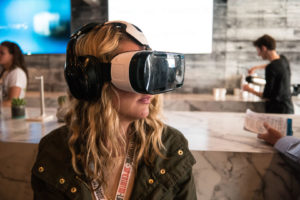
1. Virtual Reality for Marketing
Marketing has changed significantly in the past decade. Even as online channels further usurp marketing budgets, direct marketing, events and on-campus tours remain important for higher education marketing pros. Inbound strategies must complement outbound. Every on- and offline touchpoint must demonstrate the unique value of your school and provide multiple opportunities to experience the excitement of life as a student. According to a May 5, 2016 article about higher education marketing:
“A recent study by The Parthenon Group confirmed what many adult higher-education marketers already know: prospects consider program first and brand second. A Google study provides further insight, noting that 90 percent of higher-education shoppers don’t know what school they want to attend when they begin their search, and 83 percent of query paths begin with non-branded terms…
“Based on these findings, it’s evident that online targeting and segmentation at the program level is required to attract prospective adult students.”
Leading higher education marketers are already seeing VR as a way to highlight and promote specific academic programs, particularly those programs that help them stand out as an institution.
And what better way to engage people than through the power of storytelling?
“[VR] is inventing a new way to tell a story.”
– Jacques Methe, President, Cirque du Soleil Media
Let’s take a student interested in a top MBA program that also offers strong international training.
With virtual reality, an institution like Dartmouth’s Tuck School of Business could create a VR experience that allows prospective students to connect with Tuck’s study and work abroad programs, international associations and alumni groups, and perhaps even to interact with past and current student projects.
This experience can fully immerse the prospect in a student story – a persuasive “Choose Your Own Adventure”-style campus and academic program experience that takes them on a global tour that’s rich with interactive multimedia. Powerful!
However, VR’s challenges are the same regardless of your audience. Lea Kozin (@leakozin) does a great job of summing up VR’s marketing challenges in a recent post at VR Scout.
2. Virtual Reality for Admissions
Like marketing, higher education admissions professionals will have multiple ways to benefit from virtual reality, such as providing more customized experiences based on the specific interests of a prospect. Interested in the arts? Sustainability? Music? Business? Law? Tennis? You name it – admissions professionals will be able to easily provide customized VR experiences catering to interests of students and parents alike.
Additionally, admissions professionals will be able to engage prospects in the virtual world in order to ask them questions, serve as a virtual guide and – ideally – get them to visit the campus in real life (IRL!).
As the holders of the first touch – admissions and marketing could be on the bleeding edge of using VR to reach and engage prospects. But they’ll need to be willing to take some chances.
3. Virtual Reality for Campus Housing and Residential Life
Choosing a dormitory or school housing can be a tough decision. Even for students who have visited the campus in-person, it’s unlikely they experienced the breadth of housing options or visited the rooms where they may end up spending an academic year or more of their life. Based on our data (CampusBird served up more than 78,000 virtual tours in the first 6 months of 2016) dormitory/residence tours are among the most popular virtual tours that a school can provide.
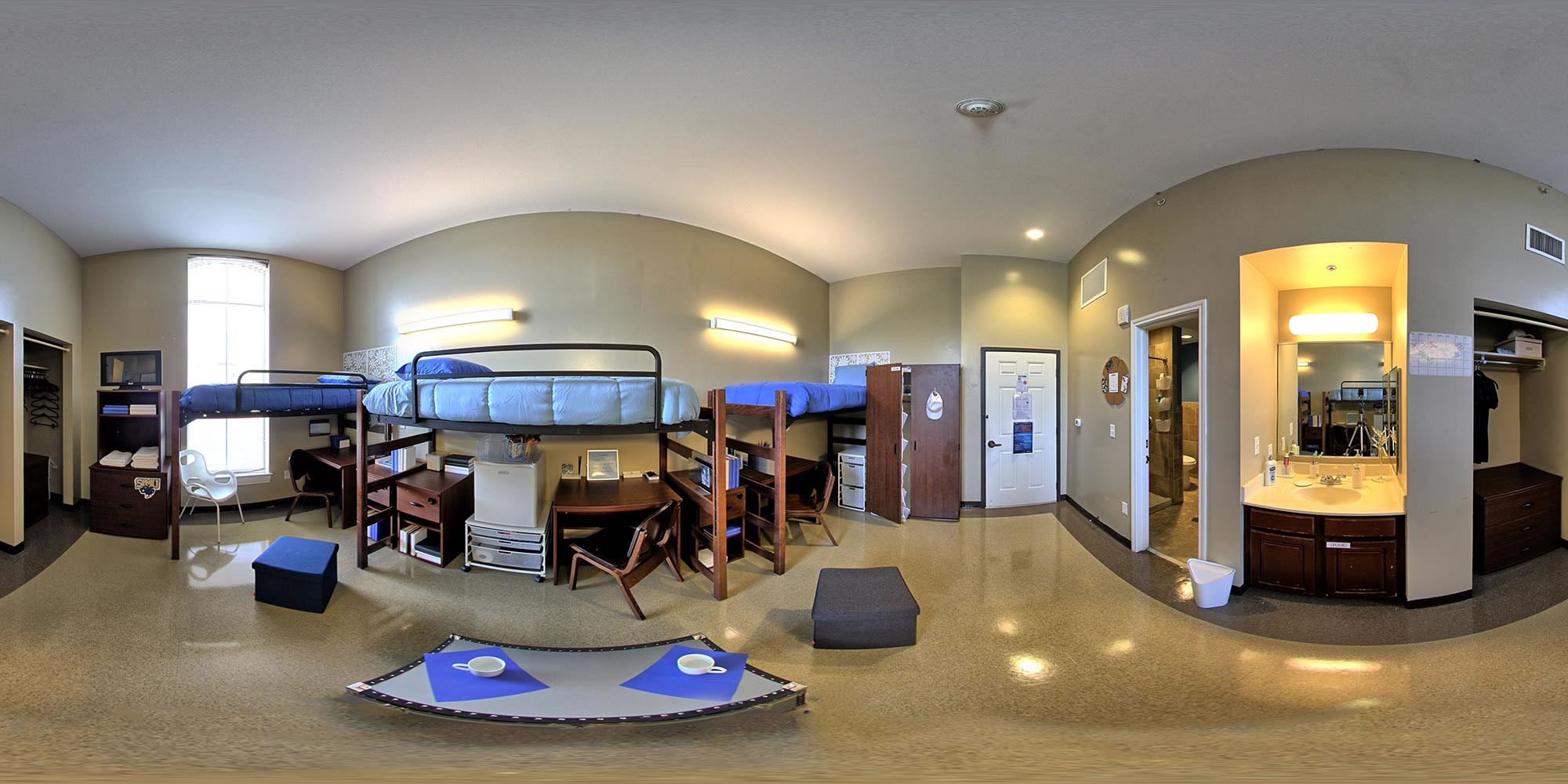
With virtual reality, housing and residential departments will provide students and parents the ability to experience the on-campus location of a dormitory, its surroundings and exterior, and – perhaps most important – the interior common areas and rooms themselves. This application of VR can help students get more comfortable with and excited about where they will be living.
(Next page: Virtual reality implementations 4-5)

Zack Mertz is VP of Design and Production for CampusBird.
- Can high-tech scale high-touch? - September 4, 2026
- Your institution’s AI strategy needs instructional designers - September 2, 2026
- The hidden link between AI strategy and student retention - August 31, 2026