
The common denominator: they are institutional goals.
But here’s the paradox: while schools will go to great efforts to identify, select and implement tools to protect academic integrity in their education programs – oftentimes, the adoption and use of these systems are left at the discretion of the faculty.
Whether it is using anti-plagiarism software on submitted work, or requiring proctoring for online exams, most institutions do not feel that they can “require” faculty to protect integrity, fearing that such a requirement would trespass on the faculty member’s domain. But now the institutional goals for integrity are potentially compromised.
In actuality, the processes and applications available today to protect academic integrity have no impact on teaching. Remote proctoring, for example enables students to take online exams from the convenience of their own home, on their own schedule, while still maintaining the same academic integrity as found in a traditional proctored classroom – without having any impact on teachers.
Teachers can still teach, test and grade the way they want.
In truth, teachers should teach and develop valuable content, period. It should not be a faculty member’s responsibility to choose the tools to stop cheaters or to police integrity.
Giving faculty the responsibility to enforce academic integrity transforms the intended nurturing relationship between teacher and student, into one of confrontation.
As the foundation of quality and fairness, integrity should be an institutional tool or asset. We don’t ask faculty to choose which bricks to use in the classroom, and we shouldn’t ask faculty whether online students should be permitted to cheat.
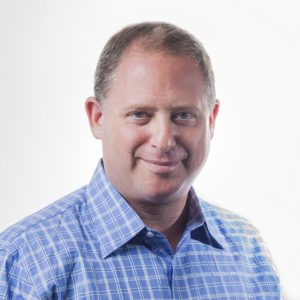
Mr. Winneg founded Software Secure to promote test integrity. An industry pioneer, the company was the first to offer remote proctoring systems for online testing programs. A designer of the company’s patented Securexam Lockdown technology and Remote Proctor products, Mr. Winneg has lead the design of secure computer-based testing systems for higher education and K-12 online education programs and national certification providers in the US, Canada and Scotland. Mr. Winneg received his J.D. from the Benjamin N. Cardozo School of Law, and a B.A. with Honors from Swarthmore College.
- Online academic integrity: an institutional choice - January 28, 2014