
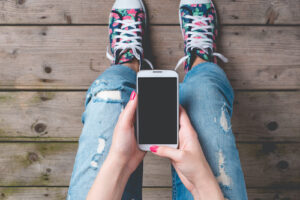
After downloading I-Connect, the students will receive periodic alerts with prompts to determine whether they are using goal-oriented behaviors, such as paying attention or participating in classwork. Additionally, the app will graph students’ progress, which the students, teachers, and support staff can analyze to track improvements.
Estrapala will be mentored by Erica Lembke, a professor of special education at MU, and by Howard Wills, a professor at the University of Kansas.
“We need to leverage that developmental need for students to make independent decisions and have a say in what they want to do, and I want to combine that with some evidence-based practices that we already know work, such as goal-setting, self-monitoring and self-evaluation,” Estrapala said.
“Adults often feel like they know what is best for the students, but going forward, let’s ask the students themselves what their goals are and then have them go through a process of learning about their own behavior and how to change it in a systematic way that can be helpful in the classroom.”
Funding was provided by the U.S. Department of Education’s Institute of Education Sciences.
Related: Helping teacher candidates practice culturally responsive teaching

This press release originally appeared on the University of Missouri’s site and is reposted here with permission.
- Authority, responsibility, and accountability for AI in higher ed - October 5, 2026
- Why AI doesn’t replace education—it demands it - October 2, 2026
- Your institution’s website should prioritize prospective students - September 30, 2026