
The COVID-19 pandemic sparked a flurry of remote testing, and as instructors quickly discovered, maintaining humanity in the middle of remote testing experiences can be difficult.
But there are techniques and technology that can ensure student success while securing your exams.
Join eCampus News and a panel of experts, including Peter Burrell, Associate Professor at the University of Cincinnati, to learn about how to create a successful journey from in-person to online learning and assessment.
Peter will discuss how he:
• Educates students on the importance of academic integrity
• Prepares students for success and reduces online test anxiety
• Uses online proctoring to support, scale, and secure online testing
Afterward, join Honorlock for a brief demo of how its unique online proctoring solution creates a better testing experience that supports faculty and students while protecting academic integrity.

- Weak tech could push students, faculty to other institutions - April 13, 2026
- 13 predictions about edtech, innovation, and–yes–AI in 2026 - January 1, 2026
- 5 essential dimensions of AI literacy - December 12, 2025
More from eCampus News

McGraw Hill Transitions from Traditional Textbook Edition Publishing Cycle with New Evergreen™ Delivery Model
COLUMBUS, Ohio (GLOBE NEWSWIRE) — McGraw Hill announced the launch of an industry-first delivery model that releases digital product updates directly to existing courses already built by instructors, replacing the…

Why AI doesn’t replace education—it demands it
Working in higher education, I’ve been asked the same question several times—and with increasing frequency in the last year: Is AI going to replace the need for education?
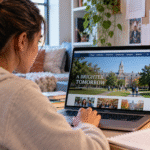
Your institution’s website should prioritize prospective students
I’ve spent more than 30 years working in higher education, so I know my way around a college website. I understand how institutions are organized. I know the difference between admissions and enrollment, academic affairs and student affairs, advancement and communications. I generally have a pretty good idea of where information should live.

When AI’s architects ask to slow down, education must speak up
When the people building the world’s most powerful artificial intelligence systems warn that their creations are advancing too quickly, the rest of society should stop and listen.

Stop trying to AI-proof your assignments
A few years ago, many of us in higher education were asking a fairly straightforward question about AI: How do we stop students from using it to do their work? I was asking a different question.

Using student housing to sharpen your retention strategy
Ask any university president how they can improve visibility into student well-being and satisfaction, and housing may not come up at all, yet housing teams have insight into some of the earliest and most robust signals of student risk and satisfaction anywhere on or off campus.