
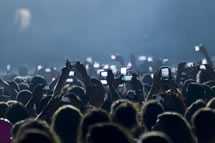
How do you get students to look up?
Many students have been accessing online information since toddlerhood. They know that everything taught is most likely on the net; yet, they still come to class. However, as we all know, they come to class often wanting to be on the net rather than listening to us lecture. Of course, they are not looking up course-related materials, but rather, just feel comfortable being on the Internet – like a saber tooth cat in a den.
How does one coax out the cat? If the majority of course content is Google-a-ble, perhaps understanding that face-to-face value occurs through the organization and conveyance of that material may help students appreciate the class process.
However, looking to the near horizon, even organization and conveyance of content is gaining rich sophistication on the Internet, making it that much more difficult to claim that face-to-face classrooms, or even online classrooms, are needed to guide students through complex information. One might consider that there is no way to continue to ignore that our profession has been replaced with the robotics and sophisticated algorithms of the Internet. What used to be valuable information garnered in our years of doctoral study, and nearly impossible to find without advanced card catalog search abilities or an expensive textbook, can now be replaced with any search engine in a matter of seconds.
The ghostly faces conundrum
While banning laptop use or cell phone use during class may be a class policy, observing these interactions can also be useful in understanding the allure.
In a different NPR interview, the musical group the Punch Brothers described how they learned to appreciate their audiences’ use of cell phones during their performances. With no syllabus dictates, they stopped fighting against the “fiddling around with devices” and found a creative solution to reinvent the phenomenon. To their band, the fans’ faces lit by phones created a kind of “ghostly gathering of faces.” The band imagined they were playing to ghosts, and also reimagined what their audience’s behavior would mean to them as performers.
Would knowing what they were doing on their devices mean anything to them as performers? All the Punch Brothers knew, as do we college instructors, is that a crowd is gathered in front of them. The point is that trying to control the experience in some way by banning or shaming the use of electronics, or to take it personally, would be draining and diminishing the experience of performing (or lecturing).
If audience-goers are not fully engaged with a live concert, why do they attend? Why do they not simply listen to recordings on YouTube? Are they missing the musical value of the live performance, or do their personal recordings, selfies, Instagram postings, and Facebook feeds add even more to the experience? Or, has the musical value of live music so dissipated that other activities must be added to the event to make it worthwhile to attend? The similarities to the face-face classroom are hard not to notice.
(Next page: Solutions through “Yoda Google”)
- 25 education trends for 2018 - January 1, 2018
- IT #1: 6 essential technologies on the higher ed horizon - December 27, 2017
- #3: 3 big ways today’s college students are different from just a decade ago - December 27, 2017