
Is your keyword’s average position “above the fold” (higher than position five) for all keywords? If not, you should reconfigure your keyword content. Either raise your bid for the keyword you are targeting or choose a different keyword.
According to Google:
“When customers search on Google, ads can appear at the top of the page, on the side of the page, or on the bottom of the page. Only the highest ranking ads are eligible to show at the top of the page. Your ad’s position on the page is determined by your Quality Score and your bid.”
By optimizing your ads to rank in the fifth position of Google’s search results or better, you will notice an increase in the amount of clicks and your campaign’s click through rate will improve. In turn, Google will reward your efforts with a higher Quality Score and lower Cost Per Click (CPC).
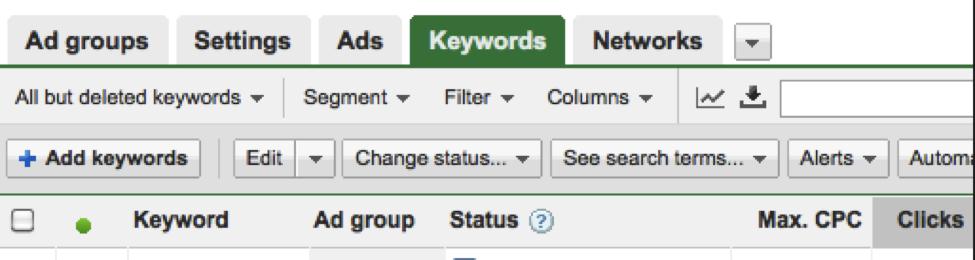
Step 3: Determine which keywords are taking up a disproportionate amount of your campaign’s daily budget. Review keywords by click through rate to determine if page position and keyword bids need adjusting. Generally, if your ad has a low click-through rate, additional adjustments are necessary. Use the keyword filter to sort by “Cost Per Click” and decrease your bid on keywords with high CPC and low conversions.
Step 4: Last but not least, sort your keywords by “Quality Score.” Use “pause” on any keyword with a score of only one or two. This will improve the quality score of your campaign’s ad group and improve results.
From recruitment to enrollment, digital marketing success in admissions requires an iterative approach. A strong strategy includes multiple components and should be revised based on results. These refinements will ensure that you maximize the return on your investment.
Susie Gotschall is a Search Analyst at Hobsons.

- 5 leadership priorities to become AI-ready - October 9, 2026
- Learner agency comes first in AI-driven digital literacy - October 7, 2026
- Authority, responsibility, and accountability for AI in higher ed - October 5, 2026