
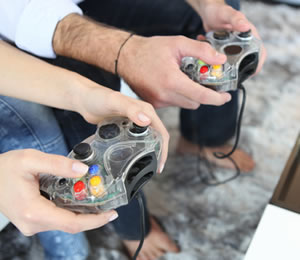
O’Bannon alleges that an NCAA monopoly is enforced with one particular form it requires every student athlete to sign before he or she can play. He says the form grants the NCAA exclusive commercial rights forever—including rights to use the athletes’ images in video game sales and for other marketing purposes.
The NCAA says the form merely give it permission to “promote NCAA events, activities, or programs.”
In a court filing, the NCAA said the form has little to do with commercial rights.
“It says nothing about the use of student-athlete images by member institutions, nothing about video game [sales], and absolutely nothing about the right of a former student athlete to sell his own collegiate image after graduation,” the court filing stated.
U.S. District Court Judge Claudia Wilken said the lawsuits, at first glance, appeared to show the NCAA’s “conduct constitutes an unreasonable restraint of trade.”
Legal analysts said that ruling will compel the NCAA to turn over many of its business secrets to the players’ lawyers. No previous lawsuit has advanced to this stage, said Vermont Law School professor Michael McCann, who specializes in sports law. He said even if the players ultimately lose their cases, the documents could add further fuel to the debate over compensating student athletes.
“When we see what kind of money is being tossed around and how much money is made off players,” McCann said, “it could invigorate this debate. It will hit at the core issues of amateurism.”
Keller, who was named the 2004 Sun Bowl’s MVP for leading Arizona State University to victory, filed the first lawsuit in May 2009. He accuses the NCAA, its commercial arm Collegiate Licensing Co., and video-game maker Electronic Arts Inc. of using student athletes’ names, images, and likenesses without compensating the athletes.
O’Bannon, 38, filed his lawsuit two months later, and six more nearly identical lawsuits followed.
O’Bannon claims the NCAA violated antitrust laws when it compelled him to sign away commercial rights to his image before he could play basketball for UCLA. Eleven former student athletes have since joined O’Bannon’s lawsuit.
He said the NCAA uses that form to prevent him from earning royalties when the NCAA licenses his image to video game makers, television networks, apparel makers, and many others who continue to market the 1995 UCLA Bruins basketball team, which won the national championship.
The seven other lawsuits make similar claims, with Keller taking particular aim at the NCAA’s contract with Electronic Arts, which makes video games based on college football and basketball that Keller claims uses images of student athletes without compensation.
The NCAA counters that O’Bannon and all other former student athletes are free to market themselves as they see fit.
“There are a lot of inaccurate claims,” said NCAA spokesman Bob Williams, who said former athletes such as O’Bannon and Keller are free to make deals with anyone they choose. “The NCAA does not license its students’ likenesses.”
- Research: Social media has negative impact on academic performance - April 2, 2020
- Number 1: Social media has negative impact on academic performance - December 31, 2014
- 6 reasons campus networks must change - September 30, 2014