
Sustainable schools are, to put it bluntly, more attractive to staff and students. In fact, sustainability efforts help to improve building operations and help a school’s bottom line.
Green schools use less energy and water, have shown a reduction in absenteeism and an increase in student performance, and incoming freshmen are twice as likely to choose their school based on sustainability factors.
Join eCampus News and a panel of experts to learn more about how universities are becoming more sustainable, the funding mechanisms available to support sustainability improvements, and the first steps schools can take in the walk towards net-zero carbon emissions.
We’ll hear from industry experts:
• Axel Reichert, Honeywell
• Karen Cooper, Director of Offer Management, Honeywell Building Technologies
• Kevin Hogan, Editor-at-large, eCampus News

- Weak tech could push students, faculty to other institutions - April 13, 2026
- 13 predictions about edtech, innovation, and–yes–AI in 2026 - January 1, 2026
- 5 essential dimensions of AI literacy - December 12, 2025
More from eCampus News
McGraw Hill Transitions from Traditional Textbook Edition Publishing Cycle with New Evergreen™ Delivery Model
COLUMBUS, Ohio (GLOBE NEWSWIRE) — McGraw Hill announced the launch of an industry-first delivery model that releases digital product updates directly to existing courses already built by instructors, replacing the…

Using student housing to sharpen your retention strategy
Ask any university president how they can improve visibility into student well-being and satisfaction, and housing may not come up at all, yet housing teams have insight into some of the earliest and most robust signals of student risk and satisfaction anywhere on or off campus.

Access: The overlooked foundation of institutional data effectiveness
Many program evaluation reports articulate the need for better data analysis. The key to that analysis is often access. Higher-education institutions have invested heavily in data collection, analytics platforms, data warehouses, and business intelligence tools.
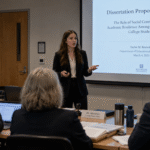
Preparing with confidence: Reflections on the dissertation proposal defense
The dissertation proposal defense represents a significant milestone in the doctoral journey, marking the transition from planning a study to engaging as an emerging researcher.
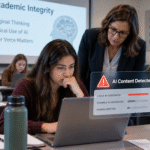
Beyond the gotcha game: Moving from AI detection to verification-first supports stronger academic integrity
AI, as they say, has entered the chat. The benefits of AI, when applied responsibly, can be a boon to the college and university environment, supporting instruction, study methods, accessibility, course design, administrative tasks and much more.

AACTE releases national framework on AI in educator preparation
A new national framework from AACTE (American Association of Colleges for Teacher Education) aims to help educator preparation programs (EPPs) navigate the rapidly changing role of artificial intelligence in education.