
COVID upended traditional higher education–and while the abrupt migration to remote and hybrid learning was disruptive, there is a silver lining.
Our post-pandemic reality has inspired college and university leaders to not only reinvent teaching methods in lecture halls and labs, but also digitize processes in the central office. In other words—finally making the paper chase a thing of the past.
Join an eCampus News panel of experts in the first of two online conversations to discuss building efficiencies in education. You’ll learn how automating your district’s various workflows–from staff onboarding and 1:1 device management to digitized e-signature consent forms–can improve the user experience for administrators, educators, parents, and students alike, while also saving time and money.

- Weak tech could push students, faculty to other institutions - April 13, 2026
- 13 predictions about edtech, innovation, and–yes–AI in 2026 - January 1, 2026
- 5 essential dimensions of AI literacy - December 12, 2025
More from eCampus News

McGraw Hill Transitions from Traditional Textbook Edition Publishing Cycle with New Evergreen™ Delivery Model
COLUMBUS, Ohio (GLOBE NEWSWIRE) — McGraw Hill announced the launch of an industry-first delivery model that releases digital product updates directly to existing courses already built by instructors, replacing the…
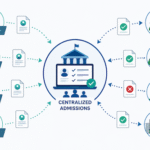
The case for centralized admissions in graduate medical education
Centralized application services transformed how students apply to medical school. They gave applicants a single point of entry, standardized how programs receive and review data, and provided comparable information institutions could actually use.

Nobody’s a loser: What genuine education leaders realize
My father, Jake M. Schrum, would take me with him to cattle shows and sales. As an impressionable teenager, I treasured these outings mostly to have one-on-one time with my dad, but also, to learn about Hereford cattle and how to judge them.

Beyond governance: Purpose, ethics, visibility, assurance, and compliance in the age of AI
Higher education continues to treat AI as just another technology to be deployed, managed, and governed. That assumption is increasingly inadequate. While AI bears some similarities to previous technologies, such as enabling automation and enhancing efficiency of processes, it is different in that it creates a continuously available capability for reasoning, synthesis, recommendation, interaction, and even collaboration.

Before students use AI, they should prove they don’t need it
Universities are attempting to adapt to artificial intelligence while considering mostly the wrong questions.

What skills are university leaders prioritizing in new hires?
Leaders are decisive for the success of institutions and proper fit is decisive for the success of leaders. Your college doesn’t only need a good leader; you need the right leader for your organization in 2026 and beyond.