
The case for centralized admissions in graduate medical education
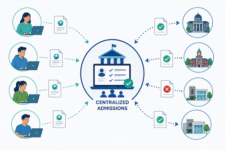
Centralized application services transformed how students apply to medical school. They gave applicants a single point of entry, standardized how programs receive and review data, and provided comparable information institutions could actually use.
Nobody’s a loser: What genuine education leaders realize

My father, Jake M. Schrum, would take me with him to cattle shows and sales. As an impressionable teenager, I treasured these outings mostly to have one-on-one time with my dad, but also, to learn about Hereford cattle and how to judge them.
Beyond governance: Purpose, ethics, visibility, assurance, and compliance in the age of AI
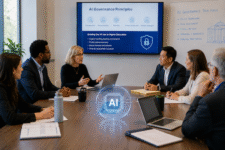
Higher education continues to treat AI as just another technology to be deployed, managed, and governed. That assumption is increasingly inadequate. While AI bears some similarities to previous technologies, such as enabling automation and enhancing efficiency of processes, it is different in that it creates a continuously available capability for reasoning, synthesis, recommendation, interaction, and even collaboration.
Before students use AI, they should prove they don’t need it

Universities are attempting to adapt to artificial intelligence while considering mostly the wrong questions.
What skills are university leaders prioritizing in new hires?

Leaders are decisive for the success of institutions and proper fit is decisive for the success of leaders. Your college doesn’t only need a good leader; you need the right leader for your organization in 2026 and beyond.
Transparency appendices may be the next essential AI disclosure practice in higher education

As generative AI becomes a routine part of academic work, a familiar question keeps surfacing in classrooms and scholarly writing alike: What, exactly, should writers disclose?
The real work of AI and instructional technology is creative

In my Systems Analysis and Design course, students are not handed the requirements for building a software application. They have to uncover them by asking the right questions within an AI-based learning activity.
How smart campuses are turning efficiency into growth

Colleges and universities are at an inflection point. As student expectations rise and competition for talent, research funding, and enrollment intensifies, campuses have a powerful opportunity to rethink how their physical environments support long‑term growth.
For schools, cyber resilience starts at the data layer

Cyber resilience in education starts at the data layer. That is because the data layer is where schools’ most important information lives and where recovery begins when something goes wrong.
Belonging by design: Practical ways to support adult learners in hybrid and asynchronous courses

For many adult learners, logging into a hybrid or asynchronous course is not the beginning of their day. It may come after a full shift at work, after helping children with homework, after managing caregiving responsibilities, or after years away from formal schooling.