
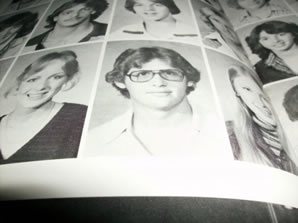

For the first time since 1887, students at the University of Virginia won’t have a hardcover memento of their college years: The school founded by Thomas Jefferson has become the latest to decide there’s no place for the traditional yearbook in the age of Facebook.
The student publishers of “Corks and Curls” decided to scrap this year’s edition because they didn’t have the money—an edition can cost more than $100,000—or the student demand. Student apathy and the financial realities of publishing makes the chance of reviving it slim, editor Michelle Burch said.
The Charlottesville, Va., university joins higher-education institutions such as Purdue, Mississippi State, and Old Dominion that no longer publish yearbooks as more students share memories through social-networking web sites.
“You have campuses now where students are less connected to the campus itself, and are not participating in the traditional types of activities,” said Logan Aimone, executive director of Associated Collegiate Press, a Minneapolis-based organization that advises student media outlets.
“People are getting more accustomed to instant documentation, but what they’re losing is permanent documentation.”
College yearbooks started to fall out of favor during the 1970s as many students lost interest, said Edmund Sullivan, executive director of Columbia Scholastic Press Association, based at Columbia University. In some places, student complaints led officials to revive publications, he said.
Now, yearbooks are losing ground again.
A survey conducted by yearbook publisher Jostens last year estimates about 1,000 colleges still publish yearbooks. Sullivan estimates that 15 years ago there were about 2,400.
“The internet has blown down the four walls of a campus in a traditional sense,” Sullivan said. “And it has blown off the covers on the yearbook.”
High school yearbooks remain popular because the schools tend to be small and students have different experiences, said Vicky Wolfe, marketing director at yearbook and school-memorabilia provider Herff Jones Inc.
“At a high school, you’re [typically] required to be within the four walls of an institution, and in college you’re not,” said Wolfe, who served as “Corks and Curls” editor in 1994.
Aimone said yearbooks are valuable research documents because they serve as an archive.
But Denieka Bean is typical of students who say they don’t need to have a yearbook.
The second-year student at Virginia plans to remember her college years through photographs and Facebook, which she thinks will be around for awhile.
“But if not, I can take the pictures off of there and put them somewhere else,” she said.
The demise of “Corks and Curls” marks the end of a publication first issued in 1888 by fraternity members at what was then an all-male school. The publication’s name harkened back to early traditions at the school. According to the university’s web site, a student who flubbed a question in class was said to have “corked.” However, “if he answered with a grand flourish of pertinent information, he was said to have ‘curled.’”
A Help “Corks and Curls” site has emerged on Facebook for those interested in reviving the yearbook. University history officer Alexander “Sandy” Gilliam said it’s up to students, not school officials, to resurrect a printed yearbook.
At Virginia Wesleyan College in Norfolk, Va., students are trying to bring back a yearbook in digital form, an approach that’s being tried at other schools as well. A campus-wide eMail recently asked students to post photos to a web site.
Heather Templeton, a junior at the 1,200-student college, worked as one of two staffers on the “Sandpiper” in 2008, the year it was discontinued. The previous year, dozens of boxes of 2005-06 books sat untouched because students didn’t pick them up, though they’d already paid for them through activity fees.
“I grew up with yearbooks, and it was a big part of my childhood. Who’s to say that Facebook is going to be around in 20 years?” Templeton said. “Who’s to say that you’d be sitting around your coffee table and going, ‘Let me pull out my Facebook?’ I think it’s kind of sad, personally.”
- Research: Social media has negative impact on academic performance - April 2, 2020
- Number 1: Social media has negative impact on academic performance - December 31, 2014
- 6 reasons campus networks must change - September 30, 2014
Comments are closed.